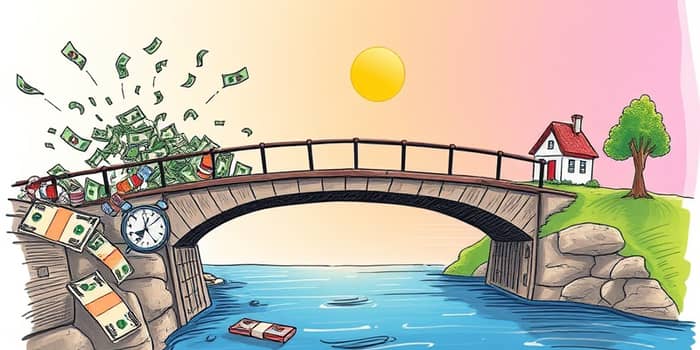
In the pursuit of long-term financial dreams, many find themselves facing immediate hurdles that threaten to derail their plans.
Short-term loans offer a swift and strategic solution to navigate these challenges without compromising future ambitions.
This article explores how these tools can act as powerful temporary bridges, guiding you from financial gaps to enduring success.
Short-term loans are financial instruments designed for quick repayment, typically within a few months to a couple of years.
They contrast sharply with long-term loans, which span years or decades and involve larger sums and lower interest rates.
The key is to recognize their fast approval processes and higher interest rates, making them ideal for urgent situations.
For example, a business might use a short-term loan to cover seasonal inventory needs, while a person might tap into it for an unexpected medical bill.
This table highlights the core differences to help you visualize their distinct applications:
Understanding these distinctions empowers you to choose wisely based on your immediate and future needs.
At their core, short-term loans function as tactical bridges, not crutches, enabling you to maintain momentum toward bigger objectives.
They provide quick capital for immediate needs, allowing you to manage cash flow or seize time-sensitive opportunities without delay.
For instance, using a short-term loan to pay off high-interest debt can free up resources for saving toward retirement.
This approach avoids depleting long-term savings, ensuring your goals like buying a home or funding education remain intact.
Consider these strategic uses that leverage short-term actions for long-term benefits:
Each application demonstrates how short-term tools can align with broader financial roadmaps.
Short-term loans are versatile, catering to both personal and business financial landscapes.
In personal finance, they can serve as buffers for emergencies or milestones on the way to larger dreams.
For businesses, they offer working capital to navigate growth phases or seasonal demands effectively.
Here are examples to illustrate their impact across different scenarios:
These uses highlight how short-term solutions can bridge the gap between present needs and future aspirations.
While short-term loans offer flexibility, they come with risks that require careful management.
The higher interest rates and larger monthly payments can strain cash flow if not planned properly.
There's also the danger of habitual use, leading to debt cycles that undermine long-term stability.
To mitigate these risks, adopt best practices that ensure responsible borrowing:
By following these guidelines, you can harness short-term loans as effective tools without falling into common pitfalls.
Deciding between short-term and long-term loans involves assessing your unique financial situation and goals.
Start by evaluating your cash flow to determine if you can handle the larger payments associated with short-term options.
Consider the urgency of your needs; if speed is critical, short-term loans provide a viable path forward.
Align the loan type with your asset lifespan or investment timeline to maximize benefits and minimize risks.
Here's a decision framework to guide your choice effectively:
This structured approach helps you make informed decisions that bridge short-term actions with enduring success.
Short-term loans are more than just quick fixes; they are strategic enablers for achieving long-term dreams.
By understanding their features, applications, and risks, you can use them to navigate financial gaps with confidence.
Remember to always borrow wisely, focusing on goals that enhance your future rather than creating new challenges.
With careful planning, these tools can help you build a resilient financial foundation, one step at a time.
References