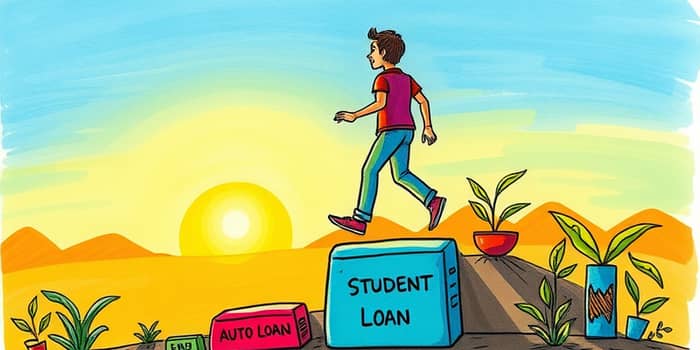
Every person’s financial journey is unique, yet a common thread links us all: the desire to regain control over our money. Facing multiple debts can feel like standing in a storm without an umbrella, but with a clear plan and supportive mindset, you can transform uncertainty into confidence.
Before crafting a plan, take a deep breath and gather every loan statement, credit card bill, and payment notice. Listing out balances, minimum payments, and interest rates illuminates the true scope of your obligations.
Calculate your debt-to-income ratio by dividing total monthly debt obligations by your take-home pay. Aim to keep this ratio under 20% to maintain flexibility and build savings. This simple measure helps you avoid overwhelming financial obligations and sets a realistic ceiling for your repayment efforts.
Once you know your numbers, select a budget framework that matches your goals and lifestyle. The classic 50/30/20 rule is a reliable starting point: allocate 50% of income to needs (including minimum debt payments), 30% to wants, and 20% to savings or extra debt payments. If debt feels heavy, shift more than 20% toward payoff until balances shrink.
For those seeking speed, dedicate 30–40% of take-home pay to debt and minimize discretionary spending. No matter which path you choose, consistency is key.
Choosing the right framework lets you tailor spending and savings to your unique situation while keeping progress predictable and measurable.
No single strategy suits everyone. Compare these popular approaches:
The avalanche method usually saves the most interest, while the snowball approach delivers motivational boosts. Aggressive payoff is for those ready to make significant short-term sacrifices for a rapid end to debt.
With a framework and strategy in place, follow these steps to keep stress low and momentum high:
By treating each step as part of a larger journey, you’ll replace anxiety with purpose and see tangible progress month after month.
When you’re ready to level up, consider these options and cultivate a resilient mindset:
Couple these tools with a shift in perspective: treat payments as non-negotiable commitments rather than optional line items. View budgeting as a marathon, not a sprint, and recognize that each timely payment brings you closer to freedom.
As you reduce your debt-to-income ratio, you’ll unlock lower interest rates, improved credit scores, and greater peace of mind. Remember to celebrate every milestone on your journey, whether it’s eliminating one credit card or shaving months off your payoff timeline.
This stress-free approach to budgeting for loan repayments combines clear frameworks, strategic payoffs, and empowering habits. By planning proactively, automating consistently, and harnessing available resources, you transform debt from a weight into a pathway toward financial confidence and long-term stability.
References