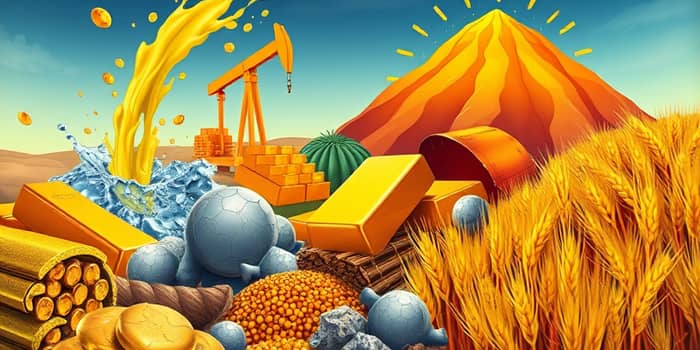
Commodities lie at the heart of modern economies. From fueling industries to filling our pantries, these raw materials shape global growth and drive markets. Whether you’re an investor mapping portfolio risks or simply curious about how everyday goods reach you, understanding this landscape is vital.
In this article, we journey through key commodity classes, unpack recent market turmoil, explore sector-specific outlooks, and offer practical strategies. By the end, you’ll have insights to navigate price swings, manage risk, and contribute to a more resilient supply chain.
Commodities are raw materials or primary products traded in global markets, often standardized for seamless exchange. They underpin everything from automobile manufacturing to household energy bills and serve as benchmarks for economic health.
Beyond production, commodities influence inflation, trade balances, and policy decisions. Exporting nations rely on favorable terms of trade, while importing economies monitor prices for consumer impact.
The 2020s have become the most volatile commodity decade in at least half a century. Supply chain disruptions, pandemics, geopolitical conflicts, and extreme weather have triggered unprecedented price swings across sectors.
According to the World Bank’s April 2025 forecast, overall commodity prices will fall about 12% in 2025 and another 5% in 2026, reaching a six-year low. Yet, the bank warns that price volatility will remain elevated, demanding vigilance from market participants.
Gold endures as a refuge during economic storms. Investors flock to it as a store of value and inflation hedge, while central banks maintain reserves to stabilize financial systems.
Despite broader price declines, precious metals posted gains in early 2025. The IMF reports that gold prices remain more than 150% above their 2015–19 real average. Citigroup forecasts a bull market in gold and silver into early 2026, driven by potential interest rate cuts and a softer U.S. dollar.
After peaking during pandemic recovery and geopolitical shocks, oil prices are set to cool. The World Bank sees Brent crude averaging around $68 per barrel in 2025 and $60 in 2026, as global supply outpaces modest demand growth.
Natural gas markets are tightening linkages through expanding LNG trade. Rising export capacity from North America further narrows regional price gaps, although extreme weather and conflicts remain upside risk factors.
Industrial metals like copper and aluminum fuel manufacturing and construction, while critical elements such as lithium, cobalt, and rare earths enable batteries and clean-energy technologies.
Market watchers emphasize the energy transition as central theme for metals demand. As renewable installations surge, copper and aluminum demand could grow by over 20% from current levels, heightening supply chain challenges and investment opportunities.
Food commodity markets experienced dramatic price spikes in 2021–22, driven by pandemic logistics and the Ukraine war. Wheat, maize, and rice prices soared, threatening food security for vulnerable populations.
Today, grain prices are easing, but climate-related droughts and supply disruptions could reignite volatility. Soft commodities like coffee and cocoa face similar uncertainties, underscoring the need for robust agricultural practices and diversified sourcing.
Understanding the forces shaping commodity markets empowers better decision-making. Whether you’re allocating capital, setting policy, or simply watching prices at the pump and grocery checkout, knowledge is your strongest asset.
By staying informed about global dynamics—from central bank moves to weather patterns—you can anticipate shifts, seize opportunities, and contribute to a more stable, sustainable future for raw materials and the economies they support.
References