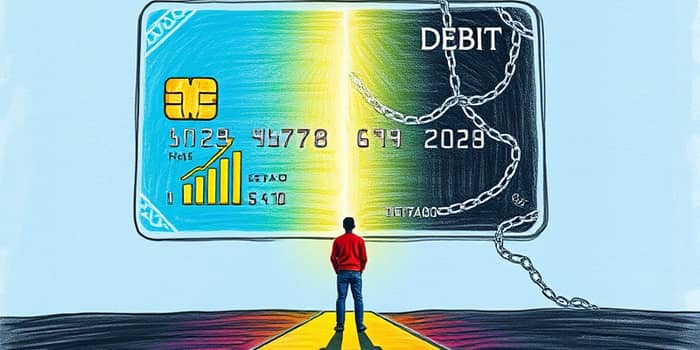
Credit cards have woven themselves into nearly every facet of our daily lives, powering purchases from morning coffee to major investments. With over 631 million active accounts in the US alone, their influence on consumer behavior and economic health is undeniable.
Yet this convenience carries both promise and peril. Understanding the dual nature of credit cards—whether they act as trusted allies or stealthy adversaries—requires a deep dive into data, psychology, and real-world usage patterns.
For many, credit cards are synonymous with simplicity and security. Tap-to-pay technology has reduced transaction times by 63%, while fraud protection offers peace of mind to 77% of users. Beyond convenience, cards serve as powerful tools for building or improving their credit scores, especially among young adults just starting their financial journeys.
Despite the glossy perks, interest rates and fees can quickly turn cards into liabilities. With an average APR of 22.8% in 2025, balances compound rapidly if not paid in full. Late payment, over-limit, and cash advance fees can also accumulate, catching many consumers off guard.
Rewards are remarkably well-distributed: low-to-moderate income (LMI) households earn around 1.8 cents per dollar spent, identical to high-income groups. In fact, nearly 70% of LMI cardholders rely on cashback to offset daily expenses.
However, research also shows that card benefits can tilt toward those with the highest credit scores, sparking debate over whether policies inadvertently favor wealthier consumers. Any change in fee or reward structures must consider potential impacts on vulnerable populations.
Understanding these dynamics helps consumers and policymakers craft solutions that preserve access without amplifying risk.
Credit cards need not be a trap. By adopting clear practices and disciplined habits, users can harness their power responsibly. Paying balances in full each month eliminates interest costs, while tracking spending against a budget helps avoid surprises.
Digital wallets and AI-enhanced security are reshaping how we pay. Innovations like biometric authentication and real-time fraud alerts continue to bolster consumer confidence. Yet policymakers are watching closely: proposals to cap fees or alter reward programs could reshape the landscape, especially for LMI cardholders.
Ultimately, credit cards are neither inherently good nor bad. They become allies in the hands of informed, disciplined users, and can turn dangerous when wielded carelessly. By understanding their nuances—advantages, costs, and evolving trends—we can leverage credit responsibly and make informed financial decisions that support long-term prosperity.
References