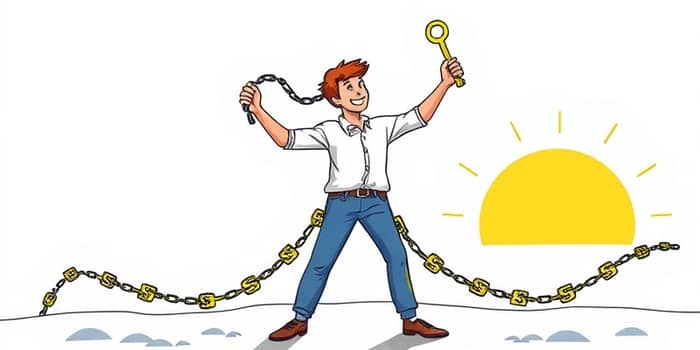
In an era where financial stress weighs heavily on millions, the concept of debt detox emerges as a lifeline to liberation.
It is a structured process designed to eliminate the shackles of bad debt, such as high-interest credit card balances that drain your resources.
This journey transforms your relationship with money, moving from a mindset of scarcity to one of abundance and control.
Good debt, like mortgages for assets that appreciate, can be strategic, but bad debt from impulsive spending traps you in a relentless cycle.
With interest rates projected to remain elevated in 2025, embracing debt detox now is more critical than ever for securing your financial future.
Debt detox is not merely about paying off what you owe.
It is a holistic cleanse that addresses behaviors, budgets, and beliefs to break free from debt accumulation.
The distinction between good and bad debt is fundamental, as it guides you to prioritize the most harmful debts first in your detox plan.
By focusing on eliminating high-interest consumer debt, you reclaim your income and peace of mind.
Begin your detox by facing your finances head-on with complete honesty.
Compile all debts into a detailed spreadsheet, listing creditors, balances, interest rates, minimum payments, and payoff timelines.
This honest assessment reveals the full picture of your obligations, empowering you to make informed decisions.
Use online calculators to simulate repayment scenarios and understand the impact of extra payments.
Following a proven framework can streamline your path to debt freedom.
Here are the essential steps, synthesized from expert sources, to guide your detox journey.
Each step builds upon the last, creating a sustainable and empowering path to debt freedom.
Selecting the right repayment method is crucial for success in your debt detox.
The two primary approaches are the debt snowball and the debt avalanche, each offering unique benefits based on your personality and goals.
Here is a comparison table to help you decide which strategy suits you best.
Consider your personal tendencies, if you thrive on quick wins, the snowball method may be ideal, but if you prefer cost efficiency, the avalanche approach could save you more.
Statistics underscore the transformative impact of even small additional payments on debt timelines.
For example, on a $5,000 credit card at 18% interest, paying an extra $80 per month can cut the payoff time from 66 months to under 3 years.
This highlights why aggressively repaying high-interest debts is essential, as it saves thousands in interest and speeds up financial freedom.
Debt settlement programs show varied success rates, with about 55% of accounts settled overall, emphasizing that persistence and strategy are key.
Effective budgeting is the engine that drives successful debt repayment and long-term financial health.
Adopt the 50/30/20 rule: allocate 50% of income to needs, 30% to wants, and 20% to savings and debt repayment for balanced financial management.
To supercharge your detox, trim the wants category and redirect those funds toward debt.
Here are practical ways to cut expenses and boost your repayment capacity.
These tactics not only free up money but also instill disciplined spending habits that last beyond the detox.
For those with multiple debts or complex financial situations, advanced tactics can simplify and accelerate the detox process.
Consolidation through a personal loan or balance transfer can lower interest rates and combine payments into one manageable sum.
However, be cautious of fees and terms that might offset the benefits.
If overwhelmed, seek credit counseling from reputable agencies that can negotiate with creditors on your behalf.
Key risks to avoid during your debt detox include the following points.
Maintaining a positive mindset focused on abundance is crucial, remember that debt took time to build, and freedom will too, requiring patience and perseverance.
Real-world examples illustrate how strategic debt detox can lead to tangible results and renewed financial confidence.
Consider a case with a $3,000 loan at 15.95% interest and a $5,000 credit card at 18% interest.
By using the snowball method and adding an extra $80 per month, the loan is paid off in 18 months, creating momentum to tackle the card faster.
This demonstrates how strategic prioritization accelerates progress and builds psychological momentum, keeping individuals motivated throughout the journey.
Debt detox is not without challenges, but awareness and proactive steps can help you navigate potential setbacks effectively.
Common pitfalls include losing motivation due to slow progress, falling back into old spending habits, and not adjusting the plan as life changes.
To avoid these, celebrate small wins regularly, establish new financial routines, and review your plan periodically to adapt to new circumstances.
Remember, setbacks are normal, the key is to stay committed and learn from each experience.
Once you achieve debt freedom, the journey does not end, it evolves into building wealth and securing your financial legacy.
Shift your focus from debt repayment to wealth accumulation by increasing savings and investing in assets that grow over time.
Continue using the 50/30/20 rule, but adjust the allocation to prioritize investments like retirement accounts or real estate.
This transition from debt repayment to wealth accumulation ensures long-term financial security, allowing you to enjoy the fruits of your detox efforts.
Addressing common questions can clarify doubts and reinforce your commitment to the debt detox process.
Here are answers to some frequently asked questions to guide you further.
Every step forward, no matter how small, is a victory in your journey to lasting financial freedom and peace.
References