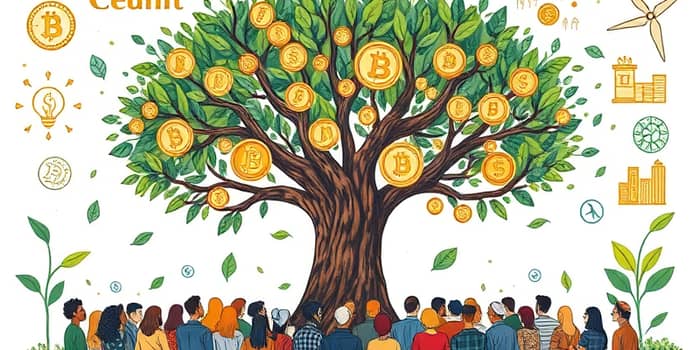
In a world increasingly attentive to social and environmental challenges, ethical investing offers a pathway to channel capital towards a more sustainable future. By weaving personal principles into financial strategies, investors can support positive change without compromising returns.
Ethical investing refers to the practice of allocating capital according to ethical or social values. It transcends mere profit-seeking by focusing on companies whose operations, products, and governance align with an investor’s moral compass. Rooted in philosophies ranging from environmental stewardship to religious teachings, ethical investing empowers individuals and institutions to shape corporate behavior through their financial choices.
At its core, this approach considers more than balance sheets. It weighs climate impact, labor rights, diversity, transparency, and overall corporate responsibility alongside traditional financial metrics.
The roots of ethical investing date back centuries, evolving from religiously motivated exclusion of certain industries to the modern ESG frameworks. In recent decades, mounting concerns about climate disruption, human rights, and corporate misconduct have fueled demand for investment products that reflect a broader stakeholder perspective.
As of 2024, global assets under management in ESG-focused funds surpassed $2.7 trillion, driven by both retail and institutional investors seeking to influence policy and risk profiles. Younger generations, in particular, prioritize sustainability and justice when building long-term wealth.
Investors employ several distinct methodologies to align values with their portfolios:
Building an ethical portfolio requires a careful balance between values and diversification. Common strategies include:
To manage risk, ethical investors monitor liquidity, concentration, and potential regulatory shifts. Including green bonds, ETFs, and mutual funds can enhance diversification while preserving value alignment.
A growing body of research indicates that ethical portfolios often match or exceed traditional investments over the long term. Companies with robust ESG practices tend to face fewer regulatory fines, reputation crises, and environmental liabilities.
Moreover, avoiding sectors vulnerable to abrupt climate regulation or social backlash can reduce downside risk. While some fear a limited investment universe might hamper returns, empirical data repeatedly dispels this concern.
Beyond financial gains, ethical investing fosters greater satisfaction and morale among investors, who can see their money work towards social justice and environmental protection. At the corporate level, the influx of responsible capital incentivizes transparency and accountability.
This alignment of interests also bolsters the fiduciary duty of asset managers, who now recognize that client values and risk management are intertwined.
Despite its virtues, ethical investing faces notable criticisms:
Addressing these challenges requires rigorous due diligence, transparent reporting, and active stewardship.
Getting started with ethical investing involves a clear, documented process:
Global initiatives shape ethical investing through guidelines and mandates. A prominent framework is the Principles for Responsible Investment (PRI), which encourages transparency and active ownership through six core principles. In Europe, the Sustainable Finance Disclosure Regulation (SFDR) classifies funds by sustainability objectives:
As regulatory standards tighten and investor demand grows, ethical investing is shifting from niche to mainstream. Artificial intelligence and big data analytics are enhancing ESG assessments, while blockchain promises greater supply chain transparency.
In the coming years, expect new thematic opportunities—such as regenerative agriculture, social equity bonds, and circular economy ventures—to redefine how capital fuels systemic progress.
Ethical investing is more than a financial strategy; it’s a powerful tool for change. By aligning values with returns, investors can nurture a sustainable economy that rewards both people and the planet.
References