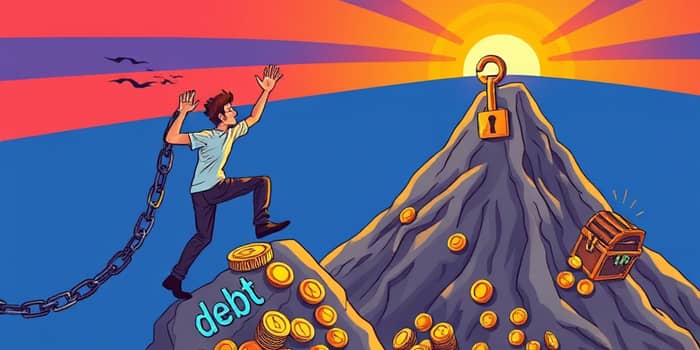
As we enter 2026, American households are confronting a staggering record $18.6 trillion in debt, a figure that continues to climb relentlessly.
This immense burden encompasses mortgages, auto loans, and credit card balances, creating a heavy weight on millions of lives.
Despite economic headwinds, there is a clear and achievable path to breaking free from this cycle and securing financial independence.
The Federal Reserve's cautious stance on interest rates adds complexity, but personal action can turn challenges into opportunities.
Understanding the current debt landscape is the crucial first step towards taking control and building a secure future.
With discipline and informed strategies, you can navigate these turbulent times and emerge stronger.
Household debt has reached an all-time high, driven by various factors that impact daily financial stability.
According to recent data, mortgages make up the largest portion at $13.07 trillion, highlighting the scale of housing costs.
Other significant contributors include auto loans and credit cards, each adding to the total burden consumers face.
Here is a breakdown of the key debt types affecting households today:
On average, each consumer carries $104,755 in debt, a number that demands immediate attention and action.
Credit card balances average $6,500 with an APR of 22.83%, making them a priority for repayment.
Delinquency rates are rising, posing risks to financial health and long-term goals.
This data reveals a K-shaped economic divide, where lower-income households struggle while the affluent benefit from asset gains.
Understanding these dynamics is essential for crafting effective debt reduction plans.
Beyond household debt, federal public debt poses significant challenges to the broader economy.
Public debt stands at $29 trillion, with total federal debt reaching $36.2 trillion in early 2025.
Projections indicate that this debt could grow to $55 trillion over the next decade, outpacing GDP growth.
The debt-to-GDP ratio is a critical metric, currently at 97% and expected to rise to 117-124% by 2035.
IMF forecasts suggest it could exceed 140% by the end of the decade, adding to inflationary pressures.
Public deficits are running at about 7% of GDP, double the pre-pandemic average.
Historical drivers have compounded these issues over time.
High debt levels can drag down real GDP growth by 0.25-0.5% annually above 120% debt-to-GDP.
It also leads to higher interest rates, crowding out investment, and increasing inflation risks.
These macro pressures contextualize the personal finance challenges individuals must overcome.
The Federal Reserve has set a higher bar for interest rate cuts, with only 1-2 reductions expected in 2026.
SOFR forward curve points to a rate of 3.50%, indicating cautious optimism in monetary policy.
Inflation is steady at around 2.4%, with assumptions of 2.5-2.75% for the next decade.
Job market stagnation and high home prices are sidelining first-time buyers, adding to financial stress.
Potential savings from rate cuts can provide much-needed relief, as illustrated in the table below.
About 20% of homeowners have rates above 5%, making them eligible for refinancing opportunities.
Most are locked at rates of 4% or lower, but improving credit scores is key to accessing better terms.
Experts urge consumers to prepare for rate cuts by monitoring SOFR and acting quickly when opportunities arise.
Surveys show that debt reduction is a top priority for many Americans entering the new year.
19% of Americans cite paying down debt as their main financial goal for 2026.
This percentage rises with age, with seniors focusing on high-cost credit card debt specifically.
36% of resolution-makers aim to pay down debt, according to a Fidelity survey.
However, pessimism is growing, with 32% expecting their finances to worsen, up from 23% last year.
78% blame inflation for their financial struggles, highlighting widespread inflation fatigue.
Middle-income savings are depleted, and variable-rate debt is causing significant stress.
Here are key statistics on current consumer sentiment:
Understanding this mindset helps tailor strategies to stay motivated and on track.
Taking proactive steps is essential to overcome debt and achieve lasting financial independence.
First, assess your debt by listing all types, amounts, and interest rates accurately.
Improving credit scores can unlock refinancing opportunities and lower rates significantly.
Refinance high-interest loans, such as credit cards and auto loans, if rates drop.
Prioritize paying off high-cost debt, like credit cards with APRs above 20%.
Prepare for potential rate cuts by staying informed and ready to act swiftly.
Consider the debt snowball or avalanche methods to systematically reduce balances.
Here is a list of effective strategies to implement starting today:
For long-term financial health, focus on investing after clearing high-interest debt.
Private debt, like direct lending, offers attractive returns of around 8.85% forecasted for 2026.
This can be a stable investment option compared to other assets with lower returns.
However, be aware of maturity wall risks in 2026 that could lead to bankruptcies.
Financing conditions are expected to remain supportive into 2026, with low spreads.
Building an emergency fund is a critical step in this journey.
Different age groups have varying priorities, with older Americans focusing on credit card debt.
Younger individuals may tackle student loans first, tailoring approaches to life stages.
Achieving debt independence requires discipline, knowledge, and proactive steps every day.
Despite macroeconomic headwinds, individuals can take control of their finances with determination.
Start by understanding your debt, improving your credit, and employing smart strategies.
With perseverance, you can break free from the chains of debt and build a secure future.
Remember, financial freedom is not just about numbers; it's about peace of mind and new opportunities.
Take action today, and forge your own path to a brighter, debt-free tomorrow.
References