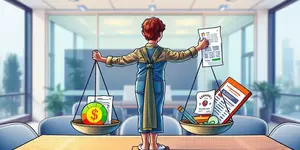
In today's fast-paced world, the lure of quick cash can be tempting for individuals and businesses alike.
Loan stacking promises rapid funding, but it hides a perilous path that often leads to financial ruin.
This practice involves applying for multiple loans from different lenders in a short timeframe, exploiting gaps in credit reporting.
While it might seem like a shortcut to solve immediate needs, it's a high-risk behavior that contrasts sharply with healthy debt management.
Understanding loan stacking is crucial to avoid falling into a debt trap that can jeopardize your financial future.
Loan stacking refers to the act of securing several loans, such as personal or business loans, from various lenders almost simultaneously.
Borrowers often do this without disclosing their other applications, taking advantage of online approval processes that are faster than credit report updates.
This allows them to accumulate large sums of money quickly, but it masks their true debt levels from lenders.
It's commonly seen in scenarios like small business financing, where entrepreneurs seek merchant cash advances or other rapid funding options.
The mechanics rely on timing, where approvals happen before hard inquiries appear, creating a deceptive financial picture.
Contrast this with debt stacking, which is a positive repayment strategy, not a borrowing method.
Debt stacking involves prioritizing existing debts for payoff, such as using the avalanche or snowball methods.
Loan stacking is not illegal, but it poses significant risks that can derail financial stability.
For borrowers, the immediate access to cash comes at a high cost, often leading to unsustainable debt burdens.
The primary risk is over-indebtedness and cash flow strain, where multiple repayments overlap and become unmanageable.
This can trap businesses in a cycle of borrowing just to meet existing obligations, causing chronic instability.
Credit damage is another severe consequence, as missed payments and high utilization rates lower scores.
To illustrate the impact, consider this comparison table of strategies.
This table highlights why loan stacking is often a misguided approach compared to safer alternatives.
Instead of resorting to loan stacking, consider sustainable methods that provide long-term relief.
Debt consolidation involves using a single loan, such as a personal loan, to pay off multiple high-interest debts.
This simplifies your finances with one manageable monthly payment and can lower interest rates significantly.
For example, consolidating credit card debt at an average APR of over 20% to a loan at 10-15% can save thousands.
Another effective strategy is the debt avalanche or snowball method for repayment.
Focus on paying off debts systematically, which builds momentum and reduces overall interest costs.
Credit counseling or debt management plans can also offer structured support.
These services negotiate lower rates and provide a single payment plan, often leading to debt freedom in 3-5 years.
To protect yourself from the pitfalls of loan stacking, adopt proactive financial habits.
First, assess your debt situation honestly and avoid the temptation of quick fixes that seem too good to be true.
Educate yourself on how lenders operate, including their use of anti-stacking policies and real-time credit checks.
If you need funding, explore alternatives like debt consolidation loans or balance transfers with 0% introductory rates.
Remember, discipline is key to breaking free from debt cycles.
Create a budget that prioritizes debt repayment and cuts unnecessary expenses.
This approach not only improves your financial health but also boosts your credit score over time.
Loan stacking might offer a temporary solution, but it's a risky gamble with long-lasting consequences.
By understanding its dangers and embracing safer strategies like debt consolidation, you can achieve true financial stability.
Focus on building a sustainable path that prioritizes repayment and avoids the pitfalls of over-borrowing.
Your financial future deserves a strategy rooted in wisdom, not desperation.
Take control today by making informed choices that lead to lasting freedom from debt.
References