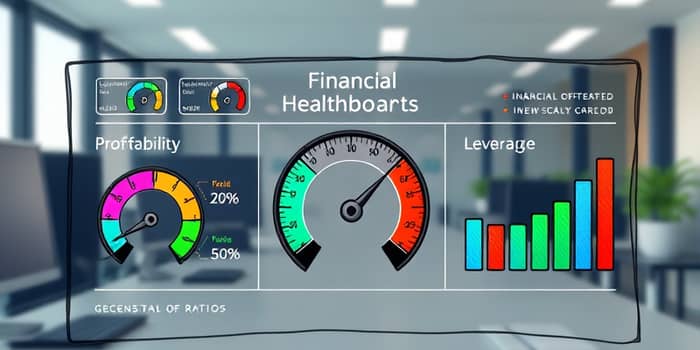
Just like a regular health checkup reveals vital signs, financial ratios transform raw numbers from financial statements into interpretable indicators of strength, risk, and performance. By examining a suite of metrics, you gain a comprehensive view of an organization’s stability and growth potential. This article will guide you through the essential ratio categories, data sources, and practical interpretation rules to assess both business and personal financial health.
Financial ratios act as vital signs for businesses and households, providing snapshots of stability and risk. They encompass diverse categories, each answering a critical question about fiscal well-being. No single ratio tells the whole story; you must track trends over time and benchmark against industry peers or personal goals.
All ratio calculations rely on accurate data extracted from core statements. This ensures your analysis rests on solid foundations and reduces the risk of misleading conclusions.
Once you collect this raw data, ratios enable:
This family of ratios addresses the question: “Can you meet your short-term obligations as they come due?” It applies to both businesses and individuals, distinguishing between overall and immediate liquidity.
The current ratio measures overall short-term liquidity by comparing current assets to current liabilities. It answers: “How many dollars of liquid assets cover each dollar of liability?”
Formula: Current Ratio = Current Assets ÷ Current Liabilities
Rule of Thumb: A ratio between 1.2 and 2.0 is generally considered healthy. Below 1.0 hints at liquidity stress, while above 3.0 may indicate inefficient asset utilization. Industry standards vary, so benchmark against peers.
Example: A company with $750,000 in current assets and $500,000 in current liabilities has a current ratio of 1.5, suggesting a comfortable liquidity cushion.
The quick ratio refines the current ratio by excluding inventory and prepaid expenses, focusing on the most liquid assets. It answers: “Can you meet immediate liabilities without selling inventory?”
Formula: Quick Ratio = (Current Assets – Inventory) ÷ Current Liabilities
A solid quick ratio typically falls between 1.0 and 1.5. Values below 1.0 may signal reliance on turning inventory into cash under creditor pressure, while very high ratios could suggest underused stock.
For individuals, liquidity translates to how many months of expenses can be sustained by liquid savings. This personal ratio answers: “How long could I cover living costs if income stopped?”
Formula: Liquidity Ratio = Liquid Assets ÷ Monthly Expenses
Target Range: Aim for three to six months of expenses in cash, checking, and money market accounts. Avoid counting funds in long-term retirement accounts due to withdrawal penalties.
Leverage ratios address long-term financing risk, answering: “How much does debt amplify your financial exposure?” They are crucial for assessing creditworthiness and stability.
This ratio compares total debt to shareholders’ equity, indicating how a company finances its operations. It answers: “How aggressive is your debt financing?”
Formula: Debt-to-Equity Ratio = Total Debt ÷ Total Equity
A higher ratio means increased financial risk, as debt service obligations can strain cash flows. Healthy ranges depend on industry capital intensity; compare against sector norms.
This metric measures the proportion of assets financed by debt rather than equity. It answers: “What share of assets relies on borrowed funds?”
Formula: Debt-to-Asset Ratio = Total Debt ÷ Total Assets
Values above industry averages suggest vulnerability to economic downturns or rising interest rates. Lower ratios imply greater asset-backed stability.
The equity ratio is the converse of debt-to-asset, showing the proportion of assets funded by owners’ equity. It answers: “How much are owners at risk?”
Formula: Equity Ratio = Total Equity ÷ Total Assets
Higher equity ratios denote stronger financial independence and internal funding capacity, reducing reliance on external creditors.
This ratio assesses whether tangible assets can cover total debt if needed. It answers: “Do real assets provide downside protection?”
Formula: Asset Coverage Ratio = (Total Assets – Intangible Assets – Current Liabilities) ÷ Total Debt
A higher value indicates robust collateral backing for lenders and bondholders, improving lending terms and investor confidence.
This cash-flow solvency metric compares operating earnings to debt service requirements. It answers: “How well does income cover required payments?”
Formula: DSCR = EBITDA ÷ (Interest + Principal)
DSCR above 1.2 to 1.5 is often seen as safe, reflecting surplus income to absorb unexpected expenses or revenue dips.
Household lenders use specialized ratios to assess personal borrowing capacity against income. Key metrics include:
Profitability ratios evaluate how effectively a business turns sales into profit. The net profit margin is a powerful summary metric, answering: “What share of revenue becomes net income?”
Formula: Net Profit Margin = (Net Income ÷ Revenue) × 100%
Higher margins signal efficient cost management and pricing power. Because margins vary widely by sector, always compare against industry peers to set realistic targets.
By tracking multiple ratios, you construct a holistic picture of financial health. Monitor trends over time, compare with industry peers, and interpret in context. No single metric suffices; each provides unique insights into liquidity, leverage, or profitability.
Regular ratio analysis empowers you to make data-driven decisions with confidence, anticipate challenges, and seize growth opportunities.
Start by gathering your latest financial statements. Calculate core ratios monthly or quarterly. Chart them to reveal patterns and spot red flags early. Set targets based on industry averages or personal goals, and adjust operations or spending plans accordingly.
With consistency and diligence, you can transform raw financial data into strategic insights and build a robust long-term financial future.
References