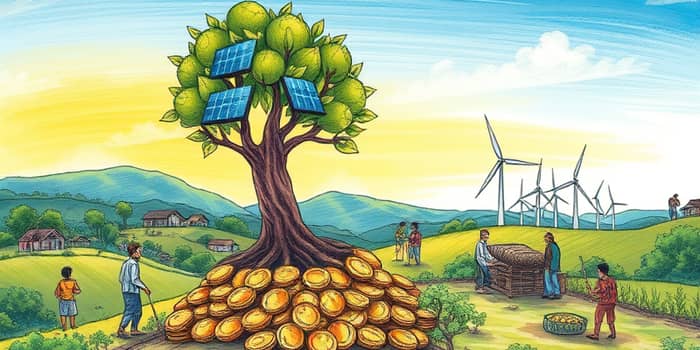
Imagine a world where your financial growth not only secures your future but also contributes to a healthier planet and a more equitable society.
This is the promise of sustainable wealth building, a transformative approach that aligns prosperity with purpose in every investment decision you make.
By integrating environmental, social, and governance principles, investors can generate returns while tackling global challenges like climate change and inequality.
It’s a powerful way to ensure your money matters beyond the balance sheet, creating a legacy of positive impact.
The journey begins with understanding that wealth is more than numbers; it’s about legacy and impact that resonate through generations.
Embracing this mindset opens doors to innovative strategies that benefit both your portfolio and the world around you.
As we look ahead, sustainable investing is evolving rapidly, driven by urgent needs and new opportunities.
Key trends are set to redefine the financial landscape, making it essential to stay informed and proactive.
Climate adaptation is emerging as a significant growth engine, with physical risks like floods and heatwaves becoming baseline assumptions.
Investments in resilient agriculture and infrastructure offer decades-long growth, not just defensive measures.
Regulatory shifts, such as the EU ESMA rules, are pushing funds to exclude fossil fuels and ensure meaningful sustainable holdings.
This creates a clear path for investors to align with ethical standards and drive positive change.
Building sustainable wealth starts with personal finance habits that foster long-term stability and growth.
By adopting disciplined approaches, you can secure your financial future while contributing positively to society.
Avoid lifestyle creep by regularly reviewing budgets to cut unnecessary spending and prioritize goal-aligned expenses.
This ensures every dollar works towards your vision, minimizing waste and maximizing impact.
Consistency is key to steady wealth accumulation, so automate your investments to ensure regular contributions.
Focus on low-cost index funds in tax-advantaged accounts like 401(k)s and IRAs to optimize growth over time.
Emotional and behavioral aspects are vital; build a safety net with an emergency fund and set short-term goals to stay motivated.
Ignore market emotions to maintain commitment to 5-10+ year horizons, allowing your investments to flourish.
To truly embed sustainability into your portfolio, explore various ESG investing methods that focus on measurable outcomes.
These approaches allow you to align your investments with your values while seeking competitive returns.
Periodic adjustments are essential as companies and ESG landscapes evolve, so stay informed and adapt your strategies.
This flexibility helps maintain relevance and maximize both financial and social returns over time.
Sustainable wealth isn't just individual; it thrives in communities that foster shared prosperity and resilience.
Inclusive models can amplify impact and build economies that benefit everyone, not just a select few.
These models demonstrate how collective action can create lasting change, turning financial growth into social transformation.
By participating in or supporting such efforts, you contribute to a more equitable and sustainable world.
Every investment journey has its challenges, but with the right mindset, you can turn risks into opportunities for growth.
Understanding the landscape helps you make informed decisions that protect and enhance your wealth.
Adopt a mindset that views sustainability as a source of competitive returns and positive impact, staying data-driven and value-aligned.
Commit to long-term horizons of 10+ years, building from basics even without inherited wealth through disciplined saving and investing.
By embracing sustainable wealth building, you join a movement that redefines success and creates a brighter future for all.
References