Imagine a world where every financial decision helps heal the planet, turning everyday purchases into acts of environmental stewardship.
This is the promise of green loans financing specific projects with tangible benefits, sparking a revolution in how we fund our future.
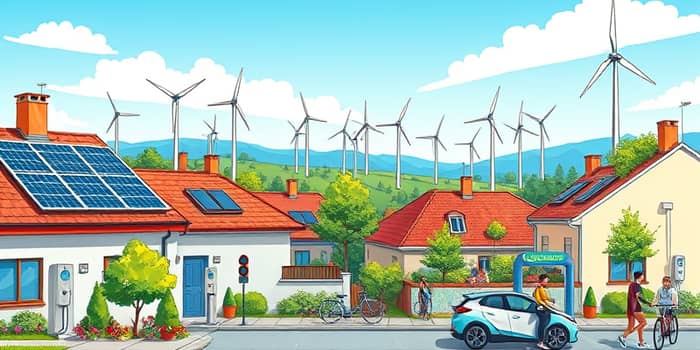
From solar panels on homes to electric vehicles on roads, these instruments are reshaping economies and empowering individuals to live sustainably.
Green loans are specialized financial tools designed to fund projects that deliver clear environmental advantages.
Unlike general corporate loans, they target areas like renewable energy, energy efficiency, and sustainable infrastructure.
This distinct approach places them under the umbrella of labelled sustainable debt, alongside instruments like sustainability-linked loans (SLLs).
SLLs tie loan terms to ESG performance targets, offering flexibility but sometimes facing scrutiny.
In contrast, green loans focus directly on use-of-proceeds, ensuring funds are allocated to green initiatives.
This revolution is not just about big corporations; it bridges financing gaps for sustainable living at a personal level.
The global sustainable finance market reached an impressive USD 5.87 trillion in 2024, showcasing its massive scale.
Projections indicate a growth rate of 19.8% CAGR through 2034, driven by urgent needs for clean energy and disaster resilience.
By mid-2025, cumulative GSS+ debt hit USD 6 trillion, with green bonds dominating at a 53.2% share.
However, green loans are catching up, with record issuance in recent years.
This table illustrates the dynamic landscape, highlighting how each instrument contributes uniquely to sustainable finance.
Different regions show varied adoption rates, reflecting local policies and economic conditions.
In North America, labelled loans dropped by over 50% in H1 2025 due to the end of green incentives.
EMEA and Europe saw green loans halved in Q1 2025, but sustainability loans are gaining traction.
APAC and China lead with penetration up to 19%, driven by strong renewables and electrification efforts.
These trends underscore the global nature of this revolution, offering lessons for investors and policymakers alike.
Several factors are accelerating the adoption of green loans, making them a cornerstone of sustainable finance.
First, they directly finance sustainable living, such as through EV loan ABS and green MBS for housing.
Second, investor preference for use-of-proceeds instruments over SLLs is boosting demand.
Third, policy support in regions like APAC, with transition labels, provides a regulatory push.
Despite challenges, these drivers ensure that green loans remain a vital tool for achieving low-carbon transition goals in hard-to-abate sectors.
While growth is robust, the green loan market faces significant hurdles that could slow progress.
In 2025, slowdowns occurred due to U.S. and EU policy rollbacks, creating negative sentiment.
Macro pressures and declining penetration rates, down from 12% to 10% in 2024, add to the complexity.
Criticisms often focus on refinancings diluting impact and the volatility of SLL performance.
Addressing these issues is crucial for maintaining momentum and ensuring that green loans deliver real environmental benefits.
For individuals, green loans offer practical ways to reduce carbon footprints and save on energy costs.
They can fund home retrofits, such as installing insulation or smart thermostats, improving energy efficiency.
Electric vehicle purchases become more affordable with specialized loan products designed for EVs.
Renewable energy projects, like rooftop solar panels, are accessible through tailored financing options.
By leveraging these tools, people can actively participate in the trillion-scale needs for a sustainable economy, making a difference in their daily lives.
Looking ahead to 2025-2030, green loans are poised for a rebound despite current slowdowns.
Volumes may be suppressed in 2025 but are expected to rise from 2026 onward due to escalating demands.
The need for USD 7.5 trillion annually by 2030 to achieve net-zero targets underscores the urgency.
Formalized transition labels and China's manufacturing lead will drive innovation and adoption.
This future is not just about numbers; it's about building a resilient world where finance serves both people and the planet.
To benefit from this revolution, start by researching local lenders offering green loan products.
Evaluate your sustainability goals, such as reducing energy bills or supporting community projects.
Consult with financial advisors to understand terms and ensure alignment with environmental standards.
Stay informed on policy changes and market trends to make timely decisions.
By taking these steps, you can harness the power of green loans to create a positive impact on the environment while securing your financial future.
The green loan revolution is more than a trend; it's a transformative movement reshaping our economy and lifestyle.
Embrace it with action and optimism, knowing that every loan can contribute to a healthier, more sustainable world.
References