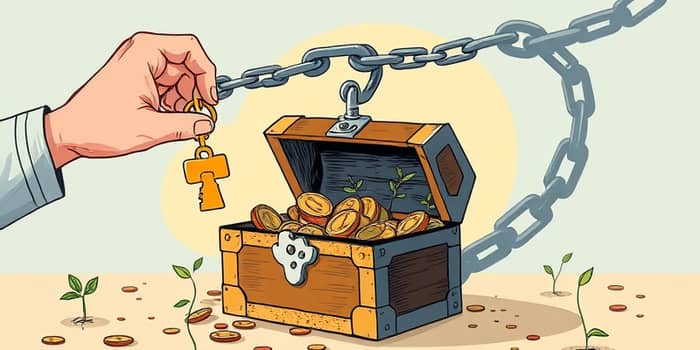
Imagine a world where every dollar you borrow is a step toward financial freedom, not a burden.
This isn't a fantasy—it's a reality when you challenge the traditional 'bad debt' myth.
Debt has long been labeled as either good or bad, but this oversimplification can limit your financial growth and potential.
With the average household carrying significant debt, it's time to shift perspective.
We'll explore how all debt is contextual and can be a tool for empowerment.
Traditional views categorize debt based on purpose and repayability.
Good debt is often seen as financing appreciating assets or income growth.
Bad debt is labeled for high-interest or non-value-adding purchases.
However, this binary approach misses the nuance of personal circumstances.
Let's break down these definitions with practical examples.
On the other hand, bad debt often involves consumer spending.
This labeling can be misleading without considering individual goals.
In business, bad debt has a distinct meaning from personal finance.
It refers to uncollectible receivables, not moral judgments on borrowing.
This perspective highlights how debt management impacts financial health.
For businesses, bad debt expense can erode profitability and cash flow.
It's crucial to understand the accounting methods used to handle this.
This table shows how businesses proactively manage debt risks.
By contrasting this with consumer views, we see debt's multifaceted nature.
Debt isn't inherently good or bad; it depends on your unique financial situation and goals.
Evaluate debt by comparing return on investment to interest costs.
For instance, a mortgage can be good if home appreciation exceeds interest.
But if it strains your budget, it might become problematic.
Personal context like income stability and future plans plays a key role.
This approach moves beyond labels to practical, personalized decision-making.
Understanding the financial metrics behind debt is essential for smart management.
Interest rates and compounding effects can make or break your strategy.
For example, credit card APRs often range from 15% to 25%.
This can double your debt in just a few years with minimum payments.
In contrast, good debt like student loans might have APRs below 6%.
Here are some critical numbers to keep in mind.
By focusing on these numbers rather than labels, you gain control.
Reframe your debt strategy around core principles like ROI and affordability.
Use good debt to leverage opportunities, such as investing in assets.
Avoid or convert bad debt by paying off high-interest balances first.
Building an emergency fund can prevent reliance on costly borrowing.
For businesses, strategic debt fuels expansion rather than covering gaps.
Implement these actionable steps to optimize your debt.
This proactive approach empowers you to use debt as a financial accelerator.
Taking control of your debt requires consistent effort and informed choices.
Begin with a thorough assessment of your current financial landscape.
Set clear goals for debt reduction and wealth building.
Monitor your credit score to understand borrowing impacts.
Seek professional advice if needed to tailor strategies.
Remember, debt management is a journey, not a destination.
By embracing these practices, you transform debt from a stressor into a strategy.
Challenging the myth of bad debt opens doors to financial freedom.
Debt, when managed with intention, can be a powerful ally.
Focus on context, ROI, and personal alignment rather than outdated labels.
Take the insights from this article and apply them to your life.
Start today by evaluating one debt decision with this new mindset.
You have the power to reshape your financial future positively.
References